
Discover the Wonders of Garden Thyme in Renton!
Updated: Jan 6
Meet Garden Thyme
Common garden thyme (Thymus vulgaris) is a delightful, low-growing perennial. It has woody stems and small, aromatic leaves. Its flavor is slightly minty, with hints of lemon and floral notes. This herb adds warm earthiness to stocks, soups, slow-cooked meats, and vegetable dishes. It's perfect for both fresh and dried uses! Thyme is hardy and easy to grow, whether on a sunny porch, in a patio container, or directly in your garden.

Common Uses & Benefits
Thyme is not just a culinary treasure! Its essential oils and compounds provide a wide range of traditional and practical uses. Here are some benefits:
Health Benefits: Thyme is widely used in remedies for its antiseptic and antimicrobial properties. It supports natural treatments for coughs, respiratory issues, and mouthwashes.
Companion Planting: Plant thyme near cabbage and other brassicas, as well as strawberries. It helps deter cabbage worms, whiteflies, and cabbage maggots. Thyme grows well with other herbs, including chives, lavender, marjoram, oregano, parsley, rosemary, sage, and savory.
Groundcover: Its low-growing, spreading habit makes thyme an excellent choice for edging garden beds or as a durable, fragrant groundcover that helps suppress weeds.

How to Grow Thyme: A Step-by-Step Guide
Follow these pointers for a flavorful harvest:
When to Plant: Start seeds indoors 8 weeks before the last frost date. Thyme will germinate in 1–2 weeks at about 70˚F. Move outdoors once the danger of frost has passed!
Sun and Soil: Thyme thrives in full sun. Plant it in a location that receives 6-8 hours of sun a day. The soil should be well-draining, not heavy or water-logged.
Depth and Spacing: Space plants 12–18" apart for good air circulation and to allow for thyme's natural spreading habit.
Watering: Once established, thyme is drought-tolerant. Water sparingly when the top inch of soil is dry. Thyme grown in a container will need more frequent watering.
Pruning: Trim regularly to maintain compact growth and prevent woodiness. When the plant becomes woody or straggly (usually around 3 years), take cuttings or root low stems to grow replacement plants.

Thyme & Sustainability
Thyme offers several sustainable benefits when grown and used mindfully:
Attracting Pollinators: When allowed to flower, thyme attracts beneficial pollinators such as bees and other beneficial insects. This supports garden biodiversity and nearby crops!
Winter Harvests: In many climates, thyme remains semi-evergreen, allowing for small, fresh harvests even in the winter months.
Self-Sustaining Gardening: Letting thyme go to seed can contribute to a self-sustaining, regenerative gardening cycle.

Harvesting & Drying Leaves
Harvest thyme mid-morning after the dew dries for peak oils. Snip stems about 1–2" above the woody base, leaving at least 1/3 of the plant intact for continued growth. Choose new, tender stems for the best flavor!
Wash gently in cool water to remove dirt, insects, and other debris. Air dry on a kitchen towel. Once fully dry, bundle stems into small bunches. Hang them upside down in a warm, dark, well-ventilated space until the leaves become crumbly. Then strip the stems and save the leaves in an airtight jar away from light and heat.
Thyme can also be dried in a dehydrator at 90˚F or in an oven if it has dehydrator capabilities and can be set to 90–95˚F.

Flavor Profile
Thyme is known for its distinctive, slightly minty and earthy flavor that adds depth and complexity to dishes.
Pairings
Thyme pairs well with garlic, lemon, olive oil, meats, vegetables, beans, tomatoes, and cheeses. It is often used as a mixture with other herbs, such as in ‘Herbs de Provence’ and ‘Bouquet Garni.’
Culinary Uses
Use thyme in stocks and broths, with mushrooms and grilled chicken, especially alongside lemon! It can also be used in butter, infused syrups for cocktails, herb salts, and savory baked goods.
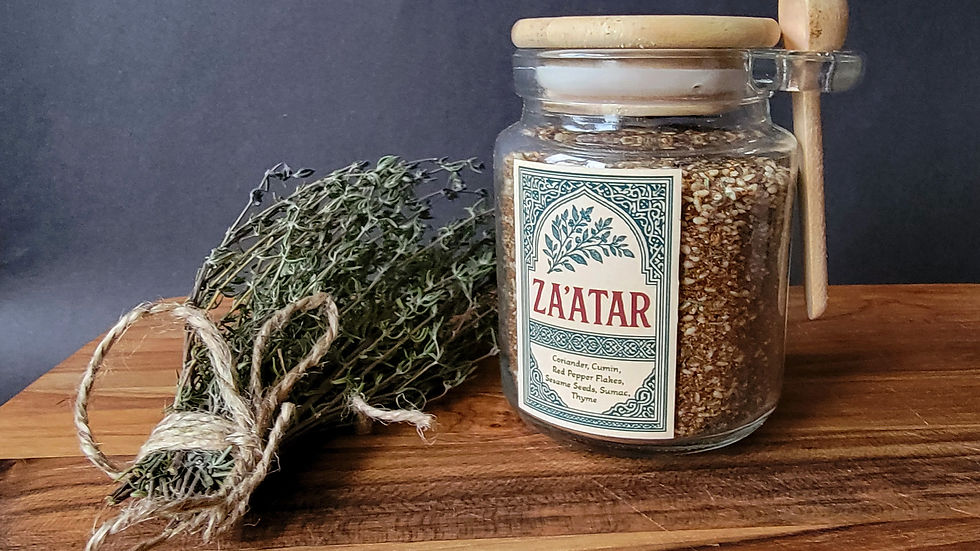
Spice Blend: Za’atar
This variation on the traditional Middle Eastern spice blend brings together toasted seeds and aromatic spices that are tangy, nutty, warm, and earthy. It elevates everything from eggs, roasted vegetables, meats, warm breads, and hummus. Inspired by the abundance of thyme in our garden and our love of Middle Eastern cuisine, we created this version of Za’atar to celebrate both heritage and harvest.
Ingredients
2 tbsp sesame seeds
1 tbsp dried ground thyme
1 tbsp whole cumin seeds
1 tbsp whole coriander seeds
1 tbsp dried ground sumac
1/4 tsp crushed red pepper flakes
Instructions
Toast whole cumin and coriander in a small frying pan over medium-high heat, stirring continuously until golden and fragrant, then grind. Toast the sesame seeds separately and leave them whole. Combine all the spices in a mixing bowl and stir until evenly blended. Transfer to an airtight container and store away from heat and direct sunlight.
When ready to use, gently crush the herbs between your fingers to release their essential oils, unlocking a burst of aroma and flavor often hidden in dried form. For the best taste, enjoy within six months!
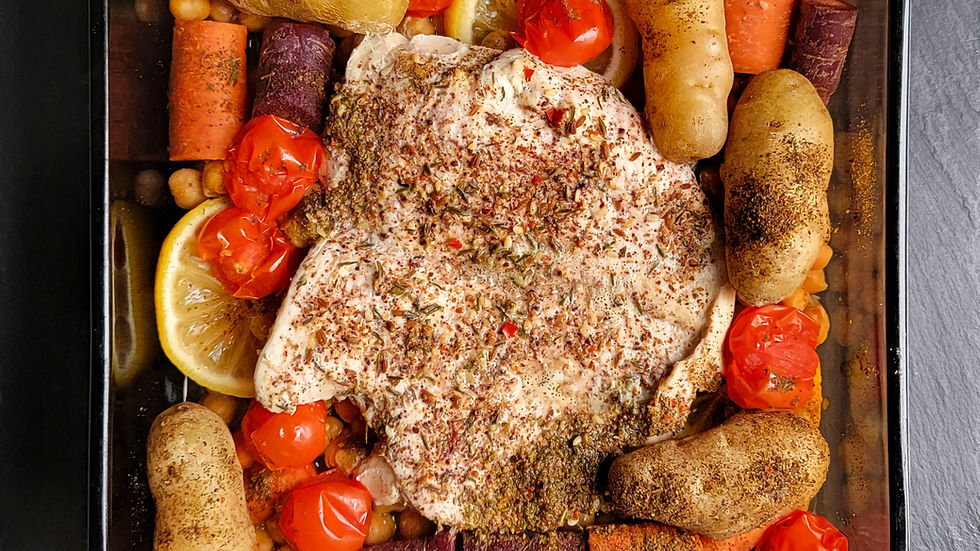
Recipe: Za’atar Chicken
Za’atar Chicken is a dish that proves a spice blend can transform everyday ingredients into something memorable. The citrusy brightness of sumac, the warmth of sesame, and the herbal depth of thyme wrap around tender chicken and garden vegetables. This creates a one-pan meal that feels both rustic and refined. It’s a recipe that invites improvisation—garlic, feta, or extra lemon can all join the party—while keeping the focus on Za’atar's timeless versatility.
Ingredients
1 chicken breast, butterflied (or substitute thighs, drumsticks, or another cut you prefer)
1 cup garbanzo beans
2 medium carrots, cut into chunky pieces
3/4 cup small potatoes
8 cherry tomatoes
2 tbsp olive oil
1 tbsp Za’atar, divided
Salt and pepper to taste
3 lemon slices
Instructions
Preheat the oven to 375˚F.
Butterfly the chicken and pound lightly to an even thickness. Season with half the Za’atar, salt, and pepper.
In an oven-safe dish, layer garbanzo beans, lemon slices, and chicken. Scatter carrots, potatoes, and tomatoes around the chicken.
Drizzle with olive oil and sprinkle with the remaining Za’atar. Optional: add garlic cloves or crumbled feta for extra depth.
Cover with foil and bake for 30 minutes, or until the chicken is cooked through and vegetables are tender.
Serve warm with pita bread or flatbread for dipping.
Serves 2.

Recipe: Gardeners’ Nicoise-Inspired Salad
This salad is a great choice for gardeners with an abundance of produce! Although it strays from the classic “recipe” for Nicoise Salad, it’s an opportunity to use fresh lettuce, tomatoes, cucumbers, beans, peas, radishes, or whatever the day’s harvest brings—all in one delicious meal. Plus, it uses both fresh and dried thyme. It’s a recipe that honors tradition while making space for creativity, seasonality, and the joy of eating what you’ve grown.
Ingredients
1/2 lb. fresh fingerling potatoes
1/2 tsp Kosher salt
1 tbsp dry white wine
6 oz French filet (haricots verts) or green beans, trimmed and blanched
2 heirloom tomatoes, deseeded and cut into 1" pieces (or 12 cherry tomatoes, halved)
16 romaine leaves, washed, dried, and separated
2 eggs, hardboiled, peeled, and quartered
1 tbsp fresh thyme, chopped (or substitute basil or tarragon)
1/8 cup white wine vinegar
1 tbsp shallot, minced
1 tbsp Dijon mustard
3/8 cup extra virgin olive oil
Ground pepper to taste
2 filets of salmon (substitute chicken or canned tuna)
Dried garden herbs: thyme, parsley, basil, chives, tarragon, red peppers, onion, garlic
Instructions
Boil potatoes in salted water until tender. Drain, toss with dry white wine, and set aside.
Boil eggs and blanch green beans separately. Season tomatoes lightly with salt and pepper.
Make the vinaigrette: blend thyme, vinegar, shallot, mustard, and pepper. Slowly drizzle in olive oil until emulsified.
Season salmon with dried herbs and bake or poach the fish until cooked to your liking.
Toss the tomatoes and potatoes with a spoonful of vinaigrette.
Arrange romaine leaves on a plate, add the salmon, and surround with vegetables, potatoes, and eggs. Drizzle with remaining vinaigrette.
Serves 2.
Sources
Rosemary Gladstar’s Medicinal Herbs: A Beginner’s Guide
Old Farmer’s Almanac: Companion Planting Herbs
Iowa State University Extension and Outreach: Thyme Growing Guide
Royal Horticultural Society: Grow Your Own Thyme
Spiceography: Thyme Information
New York Botanical Garden: Herbs FAQ
Epicurious: Types of Fresh Herbs
Let’s grow together and make Renton a greener place! 🌱


Comments