
Cilantro


Meet Cilantro
Cilantro (Coriandrum sativum) is one of the oldest known culinary
plants in the world and is popular across the globe, finding its way into
diverse recipes, from curries to salsas to pesto's. Its leaves deliver a
refreshing, citrusy lift, while its seeds—known as coriander—offer warm,
nutty depth. Few herbs offer such a dynamic flavor spectrum from
a single plant. Cilantro’s fresh flavor shines in dishes like guacamole,
chutney, and magic green sauce.

Common Uses & Benefits
• Rich in antioxidants: Cilantro contains quercetin, beta‐carotene, and
vitamin C, which help protect cells from oxidative stress. (1) (2)
• Supports natural detoxification: Traditionally used to support the
body’s ability to bind and eliminate some heavy metals. (3)
• Digestive support: Cilantro has been used for centuries in traditional
and Ayurvedic medicine as a digestive aid. (4)
• Blood sugar balance: Early research suggests coriander seeds may
help support healthy glucose metabolism. (5)
• Cuisine: Essential in Mexican, Thai, Vietnamese, Indian, Middle
Eastern, and Caribbean cooking. Its versatility makes it year-round
favorite for bold, aromatic flavor.
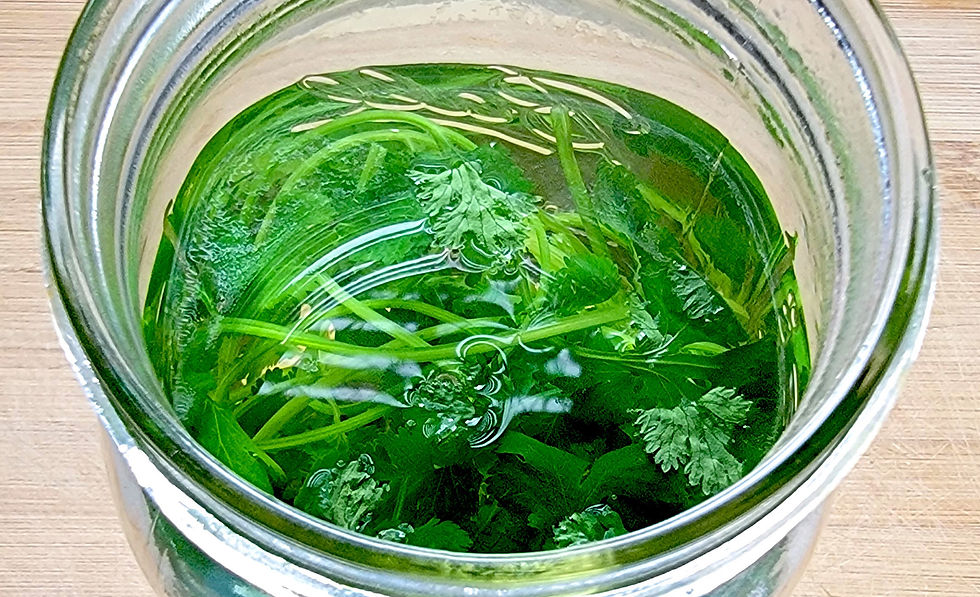
• Cilantro tea: Steep fresh cilantro leaves and stems in boiled water
for 5–7 minutes and serve with lemon and honey. Cilantro tea contains
vitamin K, and anti-inflammatory antioxidants. (6)
How to Grow Cilantro: A Step-by-Step-Guide
Follow these tips for a steady supply of tender, flavorful leaves:
• When to plant: Sow outdoors when soil temps are consistently above
50 ̊F. Cilantro bolts quickly in heat, so spring and fall are ideal.
• Sun and Soil: Full sun to light shade; prefers rich, moist, well‐drained
soil. Amend with compost, poultry manure, or worm castings.
• Depth: 1/4" deep
• Sowing: Crushing the seed—or technically fruit—husk before sowing to
separate the inner two seeds may improve germination.
• Spacing: Sow several seeds per hole as germination can be
inconsistent. Thin seedlings for leafy greens. Final spacing 3" apart in
8" rows. Or 4" apart in all directions to suppress weeds.
• Watering: Keep soil evenly moist; drought encourages bolting.
• Pruning: Harvest outer leaves first, leaving the crown intact. For
continuous harvest, sow every 2–3 weeks.

Cilantro & Sustainability
• Self‐reliance: Growing your own herbs reduces packaging waste and
reliance on long‐distance produce.
• Low input requirements: Cilantro thrives without synthetic fertilizers
or pesticides and can be grown organically. (7)
• High output: Fast‐growing and productive, especially in cool
weather. Cilantro can produce three times more seeds if planted in
close groups of multiple plants for cross-pollination. (8)
• Whole plant usability: Leaves, stems, roots, and seeds are all edible.
• Beneficial insect support: When cilantro bolts, its umbels become a
nectar bar for hoverflies, parasitic wasps, and native pollinators.
• Regenerative loop: Let plants bolt and dry down to collect coriander
seeds for cooking or replanting, reducing seed purchases, packaging
waste, and transportation footprint.

Harvesting & Drying
Harvest: Once plants have several mature stems. Morning harvest—
after dew evaporates—preserves essential oils.
• Snip stems with clean shears.
• Avoid removing more than one‐third of the plant at a time.
• Rinse gently in cool water and pat dry.
Dry: Remove leaves from stems, arrange leaves in a single layer on a
dehydrator or oven tray, and dry at low heat (90–95°F) until crisp.
Store: Keep whole leaves in airtight jars away from heat and light.
Crush only when ready to use for maximum flavor and aroma.

Flavor Profile
• Tasting notes: Bright, citrusy, herbal, slightly peppery, with delicate
green freshness.
• Pairings: Lime, garlic, onion, avocado, tomatoes, chilies, yogurt,
coconut milk, ginger, cumin, coriander seed, rice, beans, fish, chicken,
curries, salsas, chutneys, pho, birria, tacos, and grain bowls.
• Culinary uses: Fold into salsas and chutneys. Finish soups, curries, and
noodle bowls. Blend into green sauces and marinades. Sprinkle over
tacos, eggs, roasted vegetables, or rice. Stir into yogurt or crema for a
cooling contrast. Use stems in stocks, broths, and curry pastes. Add as
a garnish to cocktails or savory beverages for a bright herbal lift.

Dried cilantro + flaky sea salt + lime zest = a bright, aromatic finishing salt.
Use on popcorn, roasted nuts, grilled corn, or the rim of a margarita glass.
Spice Blend: Chaat Masala Dry Spice Blend
This blend draws on familiar Indian masala techniques and is designed
for sprinkling on Indian street food and snacks. Amchur (dried mango
powder) adds a chutney-like tang, black salt brings that unmistakable
street-food chaat-style savoriness, and green chili powder lets you
control the heat to your liking.
Ingredients:
3 tbsp dried cilantro leaves
1 tsp toasted ground cumin seeds
1⁄2 tsp toasted ground coriander seed
1⁄2 tsp garlic powder
1⁄2 tsp ginger powder
1⁄2 tsp green chili powder (add more or less to taste)
1⁄2 tsp amchur (dried mango powder)
1⁄4 tsp black salt
Instructions:
1. Toast cumin and coriander seed separately until fragrant and
browned. Grind cumin, coriander, garlic, ginger and chilies. Mix all
ingredients in a bowl.
2. Taste and adjust salt, heat, or tanginess.
3. Store in an airtight jar out of direct sunlight for up to 3 months.
When you’re ready to use them, gently crush the herbs between your
fingers to awaken their essential oils, releasing a burst of aroma and
flavor that’s often hidden in dried form.

Recipe: Cilantro Chutney
We created this chutney for our Samosa Chaat—a fresh, aromatic
counterpoint to warm spices, cool yogurt, sweet-sour-tangy tamarind,
and crispy textures. Packed with cilantro leaves, ginger, garlic, and
lemon, it’s a quick blend that delivers bold flavor.
Ingredients:
2 cups packed cilantro leaves and young tender stems, chopped
3 inches of fresh ginger, grated
1 green jalapeno pepper, deseeded and chopped
3 medium garlic cloves, peeled and crushed to a paste
1 tbsp lemon juice
1 1⁄2 tsp roasted cumin powder
1⁄2 teaspoon salt
1 tbsp water (optional)
Instructions:
1. Place all ingredients except water in a blender or food processor and
blend until smooth (or leave slightly chunky depending on preference).
Scrape the sides frequently.
2. Add water—a bit at a time—if you prefer a thinner chutney.
3. Adjust for salt, chilies, ginger, and lemon juice to taste.
4. Serve over Samosa Chaat. Enjoy!
Cilantro chutney keeps refrigerated for up to 4 days.

Recipe: Samosa Chaat
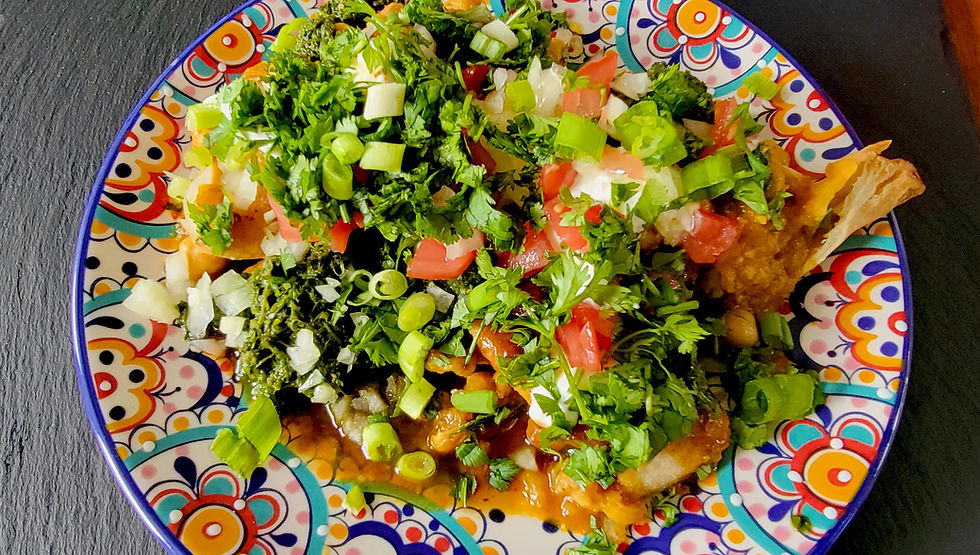
Samosa Chaat is a flavorful Indian street food made by layering crispy
samosas with spiced chickpeas, yogurt, chutneys, and garnishes for a
tangy, sweet, and spicy snack.
Ingredients:
Samosas:
Potato-stuffed samosas (homemade or store-bought)
Oil for frying or baking
Chana Masala (Chickpea Curry):
1 cup boiled chickpeas
1 onion, finely chopped
1 tomato, chopped
1 tsp cumin seeds
1 tsp ginger-garlic paste
1 tsp coriander powder
1⁄2 tsp turmeric powder
1⁄2 tsp red chili powder
Salt to taste
1 tbsp oil
Coriander Chutney:
Cilantro leaves and stems, ginger, garlic, green chilies, lemon juice, and
salt.
Tamarind Chutney:
Tamarind paste, jaggery, water, and spices
Garnish:
Yogurt, whisked smooth
Finely chopped onions and tomatoes
Sev (crispy chickpea flour noodles)
Sprinkle of Chaat Masala Dry Spice Blend
Fresh cilantro leaves
Instructions:
1. Prepare Samosas: Fry or bake the samosas until golden and crisp. If
using store-bought frozen samosas, follow package instructions. Once
cooked, roughly break them into bite-sized pieces.
2. Cook Chana Masala: Heat oil in a pan, add cumin seeds, saute
onions until golden, then add ginger-garlic paste and tomatoes. Cook
until soft, then add spices and boiled chickpeas. Simmer for 5–10
minutes until flavors blend.
3. Prepare Chutneys: Blend cilantro, ginger, garlic, green chilies,
lemon juice, and salt for coriander chutney. For tamarind chutney,
mix tamarind paste with jaggery, water, and spices, simmer until
thickened.
4. Assemble the Chaat:
Place broken samosas on a serving plate.
Spoon warm chana masala over the samosas.
Drizzle yogurt, cilantro chutney, and tamarind chutney generously.
Sprinkle chopped onions, tomatoes, sev, cilantro leaves, and Chaat
Masala Dry Spice Blend for garnish.
5. Serve Immediately: Samosa chaat is best enjoyed fresh while the
samosas remain crisp and the chutneys are tangy and flavorful.
Tips and Variations:
Use air-fried samosas for a healthier version.
Mixed vegetable samosas can be used instead of potato for variety.
Adjust the sweetness or tanginess by varying the amount of tamarind
or cilantro chutney.
Sources
(1) Molecules: Essential Oil from Coriandrum sativum: A review on Its Phytochemistry
and Biological Activity: https://www.mdpi.com/1420-3049/28/2/696
(2) Life Extension Magazine: Time to Celebrate Cilantro: https://www.lifeextension.
com/magazine/2012/2/time-celebrate-cilantro
(3) National Library of Medicine: PubMed Central: Morphohistometric analysis of the
effects of Coriandrum sativum on cortical and cerebellar neurotoxicity: https://pmc.
(4) Nutri: Does cilantro settle your stomach? The definitive guide to its digestive
to-its-digestive-benefits
(5) NewsBytes: Coriander’s blood sugar regulation benefits explored: https://www.
explored/story
(6) Tea Loves: How to make cilantro tea: https://tealoves.com/how-to-make-cilantro-
tea/
(7) Johnys Farm: https://johnysfarm.com/how-to-grow-organic-cilantro/
(8) Tasha Greer, Grow your own spices: harvest homegrown ginger, turmeric, saffron,
wasabi, vanilla, cardamom, and other incredible spices no matter where you live! pg.
This blog is created by Joni and Max


Comments